我院贾晓莉副教授与合作者的论文《Current expected credit loss model adoption》在国际会计学顶刊Contemporary Accounting Research正式发表。
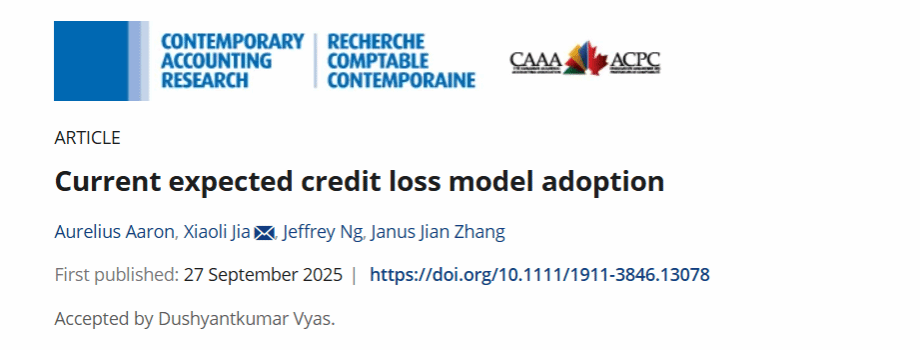
Abstract:The mandatory switch from the incurred loss model to the more forward-looking current expected credit loss (CECL) model was originally scheduled to begin in 2020. However, when the COVID-19 pandemic started in early 2020, US regulators made the switch voluntary. Our study investigates how banks' exposure to the pandemic affects their decision to adopt CECL as well as adopting banks' pandemic-era pattern of loan loss provisions. First, consistent with pandemic-driven economic uncertainty reducing banks' willingness to adopt the new model, we find a negative association between banks' pandemic exposure and their CECL adoption. This association is more pronounced for banks with more lending opportunities, more lending competition, and worse loan quality. Second, compared with non-adopters, CECL adopters report more loan loss provisions during the pandemic's early period, and less or even negative loan loss provisions during the late period. The latter scenario reflects a reversal of earlier loan loss reserves and is more pronounced for banks with more exposure to states with a higher level of vaccination, consistent with banks having a more positive economic outlook because of improving pandemic conditions. Overall, our study offers useful insights into the adoption and implementation of accounting standards during periods of economic uncertainty.
摘要:受新冠疫情影响,美国监管机构允许银行在2020年和2021年期间自愿选择是否采用“当期预期信用损失”(CECL)模型。本文考察疫情引致的经济不确定性如何影响银行是否采纳CECL,以及采纳银行在疫情期间的贷款损失准备计提行为。研究结论如下:第一,疫情暴露程度越高的银行越倾向于推迟采纳CECL,表明疫情导致的经济不确定性降低了银行采纳新准则的意愿。该关系在放贷机会较多、信贷竞争更激烈以及贷款质量较差的银行中更为显著。第二,与未采纳CECL的银行相比,采纳者在疫情早期计提了更多贷款损失准备,而在疫情后期计提较少,甚至出现负计提。这一发现揭示了经济预期改善对银行先前计提贷款损失准备的影响。总体而言,本文为经济不确定时期会计准则的采纳与实施提供了新的证据。
贾晓莉
西南财经大学会计学院副教授
研究领域为企业信息披露和银行会计。研究成果发表于Contemporary Accounting Research、Journal of Accounting, Auditing & Finance、European Accounting Review。


 西南财经大学
 English
 搜索
搜索